

Information
The Supplement Myth: Why Pills Optimise Good Habits (And Can’t Fix Bad Ones)

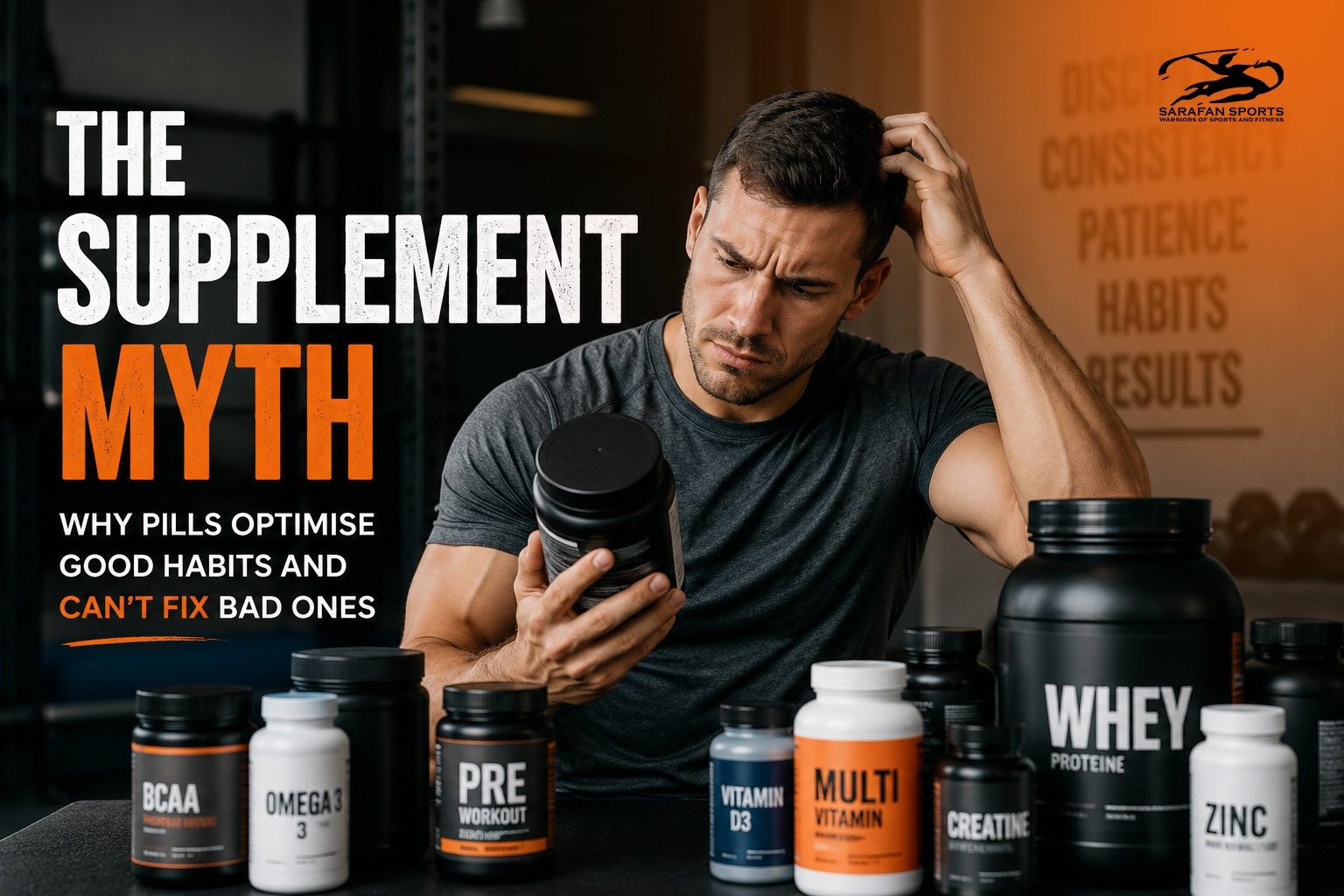
Quick Summary: Supplements aren’t a shortcut around a poor diet — but for people who are eating well and training hard, the right supplements make a measurable difference. A June 2026 review of over 150,000 participants confirmed that calcium and vitamin D pills do little on their own for people without an existing foundation (ScienceDaily, June 2026). But the same research — and dozens of others — keeps landing on the same rule: supplements optimise a solid foundation, and that optimisation is real, measurable, and worth having. This guide explains what “do supplements work” actually means, what the 2026 evidence shows, and how to build a stack that earns its place in your routine. Get the habits right first, and a well-chosen product from a range like Warriors of Sport’s supplement collection stops being a guilt-driven safety net and becomes exactly what it should be: a precise, evidence-based multiplier on the work you’re already putting in.
I’ll be honest with you: I used to think a multivitamin was a get-out-of-jail-free card. Skip breakfast? Pop a pill. Eat chips three nights running? Surely the multivitamin’s got my back. It took some reading — and a slightly humbling conversation with a nutritionist friend — to realise that’s not how any of this works.
But here’s the flip side, and it’s the part that gets lost in most “supplements are a scam” takes: when the foundation is already there — the training, the sleep, the protein intake — supplements aren’t decoration. They’re leverage. Roughly 75% of UK and US adults take some form of dietary supplement, according to the Council for Responsible Nutrition (TIME, 2019). The problem was never that supplements don’t work. The problem is most people are asking them to do a job — replacing a broken diet — that they were never designed for.
This piece walks through what the science genuinely says about supplements and diet working together, why “do supplements work” is the wrong question on its own, and how to build the kind of routine where the right products actually move the needle.
Why the “Pill Fixes Everything” Myth Took Hold
It’s easy to see why this belief spread. A pill feels like insurance against a missed meal, and supplement marketing leans into that with words like “support,” “boost,” and “optimise” — language that too often implies correction rather than addition. That’s a marketing failure across the whole industry, not a failure of the products themselves.
Three things kept the myth alive:
- Time pressure. Nobody’s meal-prepping on a Tuesday night after a 10-hour shift, so a capsule feels like the fastest fix.
- Sloppy framing. Labels promising to “fill nutritional gaps” imply your diet has a fault the product alone will patch.
- Mixing up cause and effect. Older observational studies noticed supplement users tended to be healthier overall, and people assumed the pills were doing the heavy lifting.
A 2019 study in the Annals of Internal Medicine, covered by TIME, found that once researchers adjusted for education, income, and demographics, the apparent link between supplement use and a longer life largely disappeared (TIME, 2019). That doesn’t mean supplements are pointless — it means the people in that data weren’t using them the way they’re meant to be used: as a targeted addition to good habits, not a substitute for them.
What the Latest Research Actually Shows (2025–2026)
The last year of research is actually good news for anyone using supplements the right way. Every major study confirms the same pattern: stacked on top of good habits, supplements produce real results. Used instead of good habits, they don’t.
Calcium and Vitamin D: Context Is Everything
A large-scale June 2026 review looked at calcium and vitamin D supplementation across dozens of trials involving more than 150,000 participants. On their own, calcium and vitamin D showed little to no reduction in overall fracture risk (ScienceDaily, June 2026). That’s not an argument against supplementing — it’s an argument against supplementing in isolation. The same researchers note the missing piece is weight-bearing exercise and adequate dietary calcium alongside the supplement, not instead of it. Stack all three together and the picture changes considerably.
There’s also a formulation detail most calcium supplements miss entirely: where the calcium actually ends up in the body. Vitamin K2 works alongside calcium and D3 to direct calcium toward bone and teeth rather than leaving it to accumulate in the arteries — which is why a combined calcium, D3, and K2 formula is generally a more complete choice than a plain calcium tablet on its own. Again, it’s not a fix for a diet that’s otherwise short on movement and real food — it’s a more precisely targeted version of the same supporting role.
Vitamin D2 vs D3: Why the Right Product Matters
Research from the University of Surrey, published in May 2026, found that taking vitamin D2 can actually lower levels of vitamin D3 — the form your body uses most efficiently for immune defence (ScienceDaily, May 2026). This is a strong case for being deliberate about supplementation, not against it: the form, the dose, and your own absorption all change the outcome, which is exactly why choosing the right product — not just any bottle off a supermarket shelf — matters.
When Supplements Genuinely Earn Their Keep
A Portuguese study found that food supplement users generally kept healthier lifestyles overall, meaning that in people with decent nutritional habits, supplements really do supplement rather than compensate (NCBI/PMC, 2025). Fresh 2026 research has also linked vitamin D to a 79% improvement in chemotherapy success in a small breast cancer study, and to better post-surgical recovery when levels were already adequate beforehand (ScienceDaily, Vitamin D News, 2026). These aren’t marginal numbers — they’re what happens when the right supplement meets a body that’s already primed to use it.
The Cautionary Cases
Not every study is a win, and it wouldn’t be honest to pretend otherwise. A 2025 study in Scientific Reports found supplement users among Chinese university students actually had lower overall diet quality than non-users, attributed to a “dietary compensation” effect — people using the pill to mentally tick a box instead of fixing their eating (Nature Scientific Reports, 2025). A similar pattern showed up in a Japanese school-based study (NCBI/PMC, 2022). These are exactly the cases this article is warning against — not evidence that supplements don’t work, but evidence of what happens when they’re asked to work alone.
Diet Alone vs Diet + Targeted Supplementation
Here’s the comparison laid out plainly — not diet versus supplements, but what changes when the two are combined properly.
| Factor | Diet Alone | Diet + Targeted Supplementation | Key Source |
|---|---|---|---|
| Cardiovascular event reduction | Up to 30% reduction (Mediterranean diet, PREDIMED trial) | No additional isolated-nutrient benefit shown beyond a strong diet | Iowa Women’s Health Study summary, 2026 |
| Bone fracture prevention | Supports bone density via calcium-rich foods + exercise | Calcium + vitamin D + exercise together outperform any single input alone | ScienceDaily, June 2026 |
| Recovery from surgery/treatment | Baseline nutrient status matters | Adequate vitamin D status linked to markedly better recovery and treatment response | ScienceDaily, 2026 |
| Confirmed deficiency correction | Slow, and often incomplete through food alone | Fast, measurable correction with the right targeted product | Healthline, 2023 |
| Best use case | The non-negotiable foundation | The multiplier on top of a foundation that’s already solid | Supplement Science Research Summary, 2026 |
The story that table tells: food builds the foundation, and the right supplement, taken deliberately, is what turns a good routine into an optimised one.
Who Sees the Biggest Results
Certain groups consistently show real, measurable benefit from supplementing — not as an edge case, but as the expected outcome when the basics are already in place:
- Anyone training consistently. Athletes and regular gym-goers have measurably higher nutrient turnover, meaning targeted supplementation closes gaps that diet alone often can’t keep pace with. Creatine is one of the most consistently evidenced examples — but it only amplifies strength and output that’s already being built through actual training. Take it without lifting, and there’s simply no adaptation for it to support.
- People with a confirmed deficiency. Anyone with vitamin D levels below 20 ng/mL sees genuine, fast improvement from supplementing (Supplement Science Research Summary, 2026).
- Carriers of the MTHFR gene variant. Around 40% of people carry this variant, which impairs how the body processes standard folate — these individuals need methylfolate rather than ordinary folic acid to see any benefit at all.
- Older adults, vegans, and pregnant women. Well-documented nutrient shortfalls (B12, iron, vitamin D) are genuinely difficult to close through food alone, which is exactly where targeted supplementation earns its keep (Healthline, 2023). A well-formulated multivitamin is often the simplest way to cover this broad base — not because it replaces varied eating, but because it catches the small, everyday shortfalls that even a genuinely good diet can leave behind.
- People recovering from surgery or undergoing treatment. Adequate vitamin D status has been linked to better pain outcomes after mastectomy and stronger chemotherapy response in 2026 research (ScienceDaily, 2026).
What ties every one of these together isn’t that the supplement is doing something magical — it’s that the person is already doing the work, and the product is making that work count for more.
How to Build a Stack That Actually Works
Since supplements amplify what’s already working, the real starting point is your habits — then the right products layered on top:
- Get tested before you supplement. A simple blood panel identifies actual deficiencies in vitamin D, B12, iron, and other commonly low nutrients, so you’re supplementing with a target instead of a guess.
- Sort your plate out first. Vegetables, pulses, fish, and wholegrains deliver nutrients alongside fibre and plant compounds that no isolated pill can replicate — this is the base every supplement sits on top of.
- Match the product to the actual gap. Choose vitamin D3 over D2 where you can, based on the latest absorption research (ScienceDaily, May 2026), and look for methylfolate if your MTHFR status is unknown. The Warriors of Sport Health Care range is organised by exactly this kind of use case, so you’re matching product to need rather than picking blind.
- Train and eat like the supplement matters. A protein supplement on top of inconsistent training, or a pre-workout with no sleep behind it, won’t move the needle — pair your stack with the training and recovery habits it’s designed to support, and it will.
- Don’t megadose. More is not automatically better — some studies link excessive calcium intake to higher health risks rather than lower ones. Follow the dose the evidence actually supports.
- Reassess every six to twelve months. Nutrient needs shift with age, training load, and the seasons, so revisit your stack rather than running the same products indefinitely.
Get the habits right first, and a well-chosen product from a range like Warriors of Sport’s supplement collection stops being a guilt-driven safety net and becomes exactly what it should be: a precise, evidence-based multiplier on the work you’re already putting in.
The Bottom Line
The honest answer to “do supplements work” is: yes, brilliantly — when they’re refining a diet and training routine that’s already doing most of the work. The research from 2025 and 2026 doesn’t say supplements are pointless. It says they’re being misapplied by people expecting a pill to do the job that food, training, and sleep are supposed to do. Fix the foundation, choose the right product for your actual gap, and the results compound. That’s not a myth — that’s just how it works.
This article is for informational purposes only and does not constitute medical advice. Speak to your GP or a qualified healthcare professional before starting, stopping, or changing any supplement regimen.